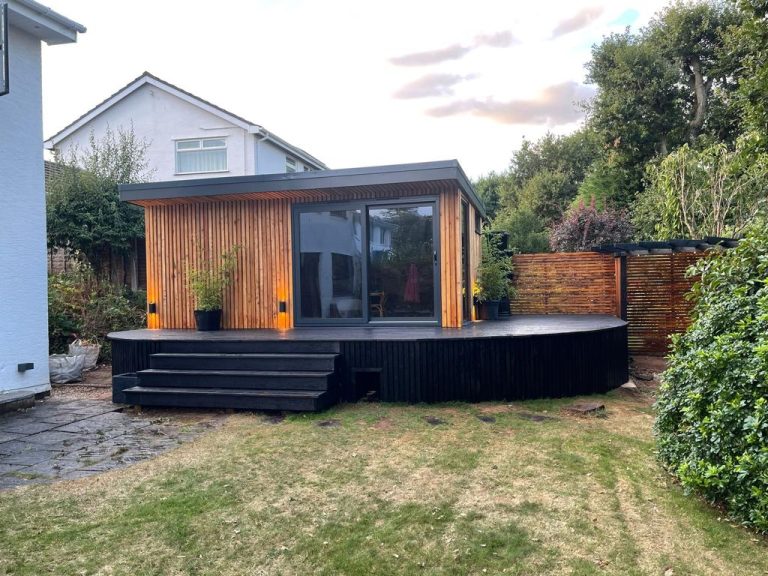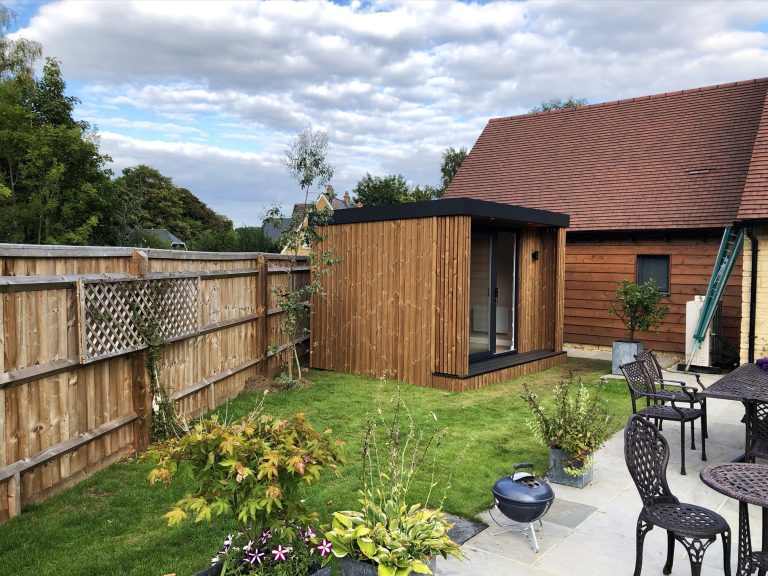
A garden office needs to fit your work, your garden and the practicalities of installation. Before agreeing a design, use these checks to identify questions that a photograph or headline description will not answer.
Check more than the outside footprint
Sketch the furniture and equipment you need inside, including the chair pulled back and storage doors open. Outside, discuss access to the entrance and around the building. Give the designer the constraints rather than assuming the first layout will fit.
Show the installation route early
Provide photos of the route from the road to the proposed position, including gates, corners and shared areas. Ask the installer what access they need and what they will check on site. Raise any separate electrical or plumbing work before agreeing the project.
Describe how you will use the room through the year
Explain your working hours, screen positions and whether you will use the room for calls, exercise or visitors. Ask about the proposed heating, ventilation and shading arrangements, and what running-cost assumptions the proposal uses.
Plan power and connectivity with the layout
List equipment and mark where you intend to use it. Ask how the proposal handles power, lighting and internet access, including the route back to the house. Confirm who supplies and installs each part instead of assuming it is included.
Not Following Building Code
Building codes are just that—regulations that exist for your protection. If you ignore them and build without the right permits and approvals, you’re putting yourself at a disadvantage when problems arise.
On top of this, neighbours and your local government can actually take action against you. Just make sure you are aware of local guidelines and that you stick to them.
Turn the checks into a clear brief
Bring your equipment list, garden photos and access questions to Vivid Pods. Ask what the proposed specification includes, what needs a separate specialist and which questions must be settled before work starts.