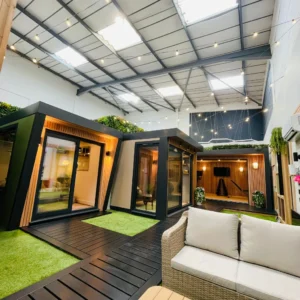
Before comparing construction methods or an extension, decide what your garden room needs to do better. Is the problem space, layout, comfort or storage? Keep that brief in mind when comparing the construction options below. Ask for a system-specific proposal rather than assuming one method suits every building.
Understanding SIP Panels: The Foundation of Modern Garden Rooms
What Are SIP Panels?
Structural Insulated Panels (SIPs) are high-performance building materials composed of an insulating foam core sandwiched between two rigid structural boards, typically oriented strand boards (OSB). Renowned for their strength, thermal efficiency, and versatility, SIP panels have revolutionized construction methods for residential and commercial projects.
Key Benefits of SIP Panels
- Energy Efficiency: SIP panels offer exceptional thermal insulation, significantly reducing energy consumption and maintaining consistent indoor temperatures.
- Durability: Their robust construction ensures longevity and resistance to wear and tear.
- Ease of Construction: SIP panels are pre-fabricated, allowing for quick assembly and reduced labor costs.
- Sustainability: Many SIP panels are made from renewable materials and contribute to eco-friendly building practices.
Why Use SIP Panels for Garden Rooms?
Using SIP panels for garden rooms ensures year-round comfort by mitigating temperature fluctuations. Their soundproofing qualities make them ideal for creating quiet, distraction-free environments. Additionally, SIP panels align with the growing demand for sustainable and energy-efficient living spaces.
Modular Extensions: Adapting Your Garden Room to Your Needs
What Are Modular Extensions?
Modular extensions are pre-fabricated sections that can be seamlessly added to an existing structure. They offer real flexibility, allowing homeowners to expand their garden rooms as their needs evolve.
Advantages of Modular Extensions
- Scalability: Modular extensions can be customized and expanded over time without major renovations.
- Cost-Effective: Pre-fabrication minimizes material waste and reduces on-site labor.
- Design Flexibility: Homeowners can select styles, finishes, and layouts that harmonize with their garden and home.
- Reduced Disruption: Modular construction is efficient and minimizes noise and debris during installation.
Applications of Modular Extensions
- Home Office: Expand your workspace to accommodate additional desks or meeting areas.
- Guest Accommodation: Create a self-contained suite with a bedroom, kitchenette, and bathroom.
- Recreation Spaces: Add dedicated zones for hobbies, fitness, or entertainment.
Step-by-Step Guide to Enhancing Your Garden Room
Step 1: Assess Your Current Space
Write down what works in the current room and what gets in the way. Measure the furniture and equipment you need to keep, then note which activities cannot comfortably happen together.
Questions to consider:
- Is the space adequately insulated for year-round use?
- Do you need additional space for specific activities?
- Does the design align with your home and garden aesthetics?
Step 2: Define Your Goals
Choose the outcome first: another work area, room for exercise equipment or somewhere to keep a hobby set up. Put those needs in order so the proposal can be compared against the most important one.
- Improving thermal performance using SIP panels.
- Adding extra space for growing needs.
- Enhancing aesthetics to create a cohesive design.
Step 3: Plan Your Budget
Set a realistic budget that includes the costs of materials, labor, permits, and additional features such as landscaping or interior furnishings.
Step 4: Design the Layout
Discuss a measured layout with the people preparing your proposal. Show the furniture, door swings, storage and routes through the room. Test everyday use before choosing finishes.
Considerations:
- Incorporate large windows or glass doors to optimize natural light.
- Use partition walls for multi-purpose spaces.
- Include outdoor elements like decks or patios for extended living areas.
Step 5: Choose Materials and Features
Select materials that enhance the durability and aesthetics of your garden room. For instance, SIP panels provide excellent insulation and structural integrity, while modular extensions allow for creative customization.
Step 6: Installation and Finishing
Work with experienced contractors to ensure proper installation of SIP panels and modular extensions. Pay attention to finishing touches, such as interior decor and landscaping, to achieve a polished look.
Maximizing Energy Efficiency with SIP Panels
SIP panels are instrumental in creating energy-efficient garden rooms. Here are some strategies to enhance their benefits:
Insulation Best Practices
- Sealed Joints: Proper sealing prevents heat loss and improves energy efficiency.
- Double-Glazed Windows: Pair SIP panels with energy-efficient windows to optimize thermal performance.
- Roof Insulation: Combine SIP panels with green roofs for additional insulation and environmental benefits.
Heating and Cooling Solutions
- Install underfloor heating for consistent warmth during colder months.
- Use energy-efficient air conditioning systems to maintain comfort in summer.
Design Tips for Modular Extensions
Multi-Functional Spaces
If the room needs to change use, plan the changeover. What stays in place, what moves and where does it go? A desk, family seating and exercise equipment each need space around them.
Blending Indoor and Outdoor Living
Think about the route from your house and the view in both directions. Decide where you want to sit, which areas need privacy and how the room would relate to the garden around it.
Storage Solutions
List the items that need a permanent home. Measure the larger pieces and check that proposed storage can be reached without blocking doors or the main activity area.
Lighting and Ambiance
Consider the tasks you do at different times of day. Note where you need light for work, where reflections might affect a screen and which controls you would want within reach. Discuss those requirements with the designer.
Matching Your Garden Room to Your Home
Harmonizing Aesthetics
Collect a small set of examples showing the colours, materials and shapes you like. Compare them with your house and garden, then ask which choices fit the proposed specification.
Landscaping Integration
Look beyond the room itself. Note where paths, planting or seating would go, and ask which parts of that work belong in the garden-room quote and which need a separate brief.
- Pathways and stone borders.
- Flower beds and shrubs for added greenery.
- Outdoor lighting to highlight the garden room’s design.
Practical Considerations for SIP Panels and Modular Extensions
Permits and Regulations
Before starting construction, check local building codes and zoning regulations to ensure compliance. Obtain necessary permits to avoid legal complications.
Cost Breakdown
- SIP Panels: Account for 30-40% of the total project cost.
- Modular Extensions: Costs vary based on size, materials, and customization.
- Labor: Professional installation ensures quality and durability.
Maintenance
Regular maintenance prolongs the life of your garden room. Clean and inspect the SIP panels and modular extensions periodically to address any wear and tear.
Compare a proposal against your priorities
Enhancing your garden room with SIP panels and modular extensions is a forward-thinking investment that combines practicality, sustainability, and aesthetics. These modern construction solutions allow homeowners to create personalized spaces that adapt to their evolving needs while adding lasting value to their properties.
By carefully planning the design, choosing high-quality materials, and prioritizing energy efficiency, you can transform your garden room into a versatile space that suits your home and garden. Start your project today and unlock the full potential of your outdoor space.
Before committing, ask for the proposed layout, included work and unresolved decisions in one place. Recheck them against the needs that started the project. Keep technical, permission and cost questions open until the relevant specialist or supplier has answered them for your specific design.