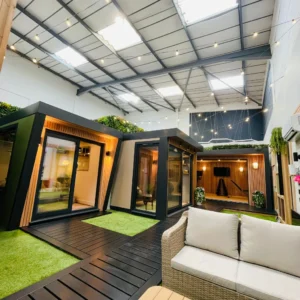
A bespoke garden room makes sense when the design fits something you genuinely want to do. Choose the activity first, then plan the furniture, equipment and access it needs. These four uses are starting points for a brief, not a promise that every room will suit every activity.
1. A place to leave a hobby set up
For sewing, drawing or other hobbies, list the work surface, storage and equipment you use. Think about how materials reach the room and where unfinished work can stay. Discuss any specialist ventilation, power or other requirements before choosing the specification.
2. A quieter setting for a pause
If you want somewhere to read, practise a quiet activity or spend time alone, describe what privacy means to you. Consider sight lines and nearby noise. Do not assume a separate building will provide absolute peace or acoustic isolation.
3. Somewhere to spend time together
Sketch seating with people using it, not just furniture pushed against the walls. Think about drinks, coats, the entrance route and how you will use the room after dark. Discuss music and neighbouring properties rather than treating the room as a soundproof entertainment space.
4. A reading or writing room that fits your routine
Choose where the chair or desk would go and check how daylight falls there. Allow for books, task lighting and the equipment you need. If the room will also be an office, show how it changes between uses without moving everything each time.
Turn the idea into a useful design conversation
Bring the activity, equipment list and garden photos to Vivid Pods. Explain which features matter most and which are optional. Ask how the proposed layout and specification support those choices, including what needs separate work or specialist advice.